TOP
TOP
Related Products
Related Cases
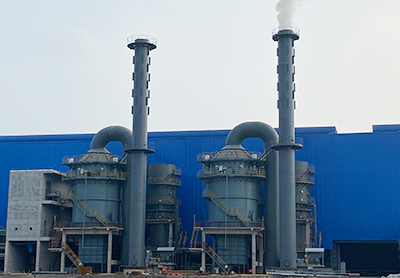
Wet electric and wet dust removal project of Steel slag of Hebei Handan Zhongban Steel Mill
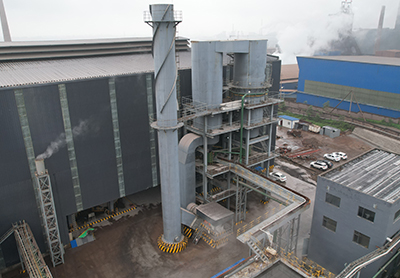
Shanxi Hongda steel slag wet electric Dust removal project
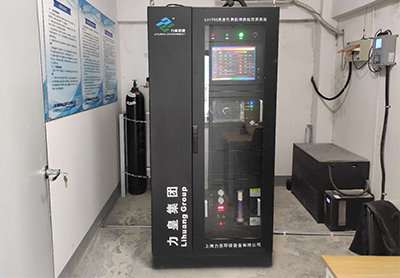
Shanghai Bulannuo Industrial packaging materials online monitoring project
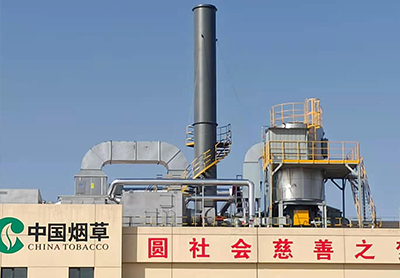
China Tobacco Ningxia Hongde VOCs exhaust gas treatment project
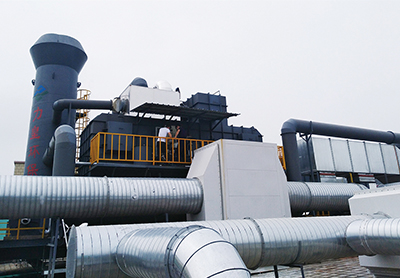
Shanghai Hengjie Wood Industry VOCs waste gas treatment project
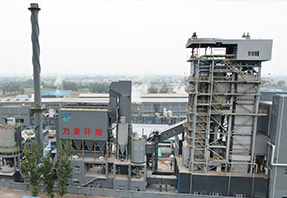
Pingyao Paper Mill desulfurization, denitration and dust removal EPC project
The reduction of VOCs emissions in winter, does it mean that the control can be relaxed?
Promoting the coordinated control of PM2.5 and ozone, and accelerating the comprehensive control of volatile organic compounds (VOCs) emissions are among the key tasks specified in the outline of the 14th Five-Year Plan.
Due to the peak of ozone pollution in the summer (May - September), therefore, for the formation of a major force of ozone VOCs, governance focus in the summer. So, in the ozone concentration is relatively not high in winter, VOCs governance can relax? VOCs emissions in winter and summer are different, where is the focus of governance? China Environment News interviewed Wang Yuesi, a researcher at the Institute of Atmospheric Physics of the Chinese Academy of Sciences.
In winter, we should focus on VOCs emissions in the heating process
Wang Yuesi told reporters, time, season, VOCs emissions are not the same, "VOCs refers to the normal temperature, boiling point 50℃ -260 ℃ of various organic compounds, with volatile or semi-volatile, there are hundreds of common. The higher the temperature of most VOCs, the more volatile, the stronger the activity, on the contrary, the less volatile or the activity is weakened. This means that VOCs emissions are larger in summer than in winter."
However, summer VOCs emission sources and winter are different. VOCs in summer came from plant emissions, which accounted for about 30%-40%. In winter, with the decrease of temperature and the weakening of solar radiation, plant activity is reduced, most into the dormant period, VOCs emissions are greatly reduced, at this time the atmospheric VOCs are mainly from man-made sources.
Man-made emissions also vary according to the seasons, Wang said. For example, common VOCs emission sources are motor vehicle emissions, oil volatilization leakage, solvent use, printing coatings, etc., but in winter, especially in northern regions, there is a large part of VOCs from heating combustion process. Due to the increasing use of natural gas and coal, a large number of VOCs will be produced in the combustion process, especially some oxygen-containing organic compounds or some polycyclic aromatic hydrocarbons, which are directly harmful to human health. Therefore, winter should strengthen the regulation of VOCs emissions in the process of heating combustion, or change to electric heating.
Seize VOCs governance "summer disease and winter treatment" of the golden period
"It should be noted that the impact of VOCs emissions in the north of the country on atmospheric ozone pollution is small, but does this mean that the control of VOCs emissions can be relaxed? No." "Wang Yuesi said.
He pointed out that winter is a good time to overhaul VOCs removal equipment, for the summer VOCs pollution control and adequate preparation.
The reporter learned that VOCs governance has "summer disease and winter treatment". The so-called "summer disease and winter treatment", that is, VOCs treatment before the arrival of summer, then summer ozone pollution prevention and control will play a multiplier effect.
In fact, VOCs emissions "summer disease and winter treatment" has a golden period. Wang Yuesi told reporters that the ozone concentration began to rise in April and May in spring, so every year after November, before April is the best VOCs removal equipment maintenance and testing "window period".
Take advantage of this time, the local ecological environment department should pay close attention to the organization of the number of VOCs related enterprises, to carry out a major investigation. Focus on checking the effective operation of enterprise VOCs treatment facilities, the implementation of operation and maintenance measures and VOCs waste gas collection and post-treatment technology.
VOCs governance needs to be carried out regularly regardless of the season
"In addition, winter control VOCs is not only to control ozone, but also to reduce the damage of toxic and harmful substances to the human body and to avoid resource loss." 'he said.
On the one hand, there are many kinds of VOCs, some of which are basically non-toxic and harmless to human body and animals; But some such as formaldehyde, aromatic hydrocarbons, especially polycyclic aromatic hydrocarbons, dioxins, etc., have strong carcinogenic, teratogenic, mutagenic and other toxicity, some halogenated hydrocarbons and nitrogen-containing oxygen compounds are also toxic, have a significant toxic effect on human health.
On the other hand, VOCs itself is a good chemical raw materials, especially high purity, high value VOCs, with environmental, health and economic benefits, its leakage consumption is also a loss. Some areas can reduce VOCs emissions by upgrading gas station oil and gas recovery facilities, and the value of recovered oil products is also considerable. With the pace of VOCs governance to accelerate, it can be expected that the future VOCs recycling will be more and more attention.
At the same time, all VOCs in the broad sense belong to greenhouse gases, reducing emissions is also to contribute to the realization of carbon neutrality in our country at an early date.
In view of the above reasons, Wang Yuesi said that no matter which season, the management and control of VOCs is a normal, must carry out daily work.
VOCs regulatory standards and emission reduction technologies are still to be improved
At present, the "14th Five-Year Plan" will be PM2.5 and ozone collaborative control into the agenda, the core of collaborative governance is nitrogen oxides and VOCs emission reduction, and the governance of the two short board in VOCs. Wang Yuesi pointed out that VOCs governance technology and monitoring regulation are still facing a lot of difficulties.
"VOCs emission reduction technology is not as mature as sulfur dioxide emission reduction technology, the two main ways at present are source emission reduction and terminal capture. Either prevent VOCs from leaking, or collect the VOCs emitted at the end for reuse or secondary combustion to remove them." 'he said.
These two ways are easier said than done. Wang Yuesi explained, on the one hand, VOCs emissions are "everywhere", for example, household appliances, office supplies, even dressing and cooking have VOCs emissions. On the other hand, there are many kinds and different VOCs in nature, and there are hundreds of VOCs that are common and monitored. There are 117 kinds of VOCs that are clearly included in the control list of China, and each kind of physical and chemical characteristics are varied.
"No good technology can apply to all VOCs governance, in addition, the detection and analysis of VOCs, although there are many optional instruments and equipment, but only a class of VOCs have good applicability. Many VOCs detection is still in the laboratory stage, and our country is relatively backward in this field of technology." "Wang Yuesi said.
In this case, Wang Yuesi believes that VOCs governance should not only focus on the key, grasp the main, aiming at motor vehicle emissions, petrochemical and fuel solvent volatilization and other key industry classification policy, along with air pollution control into the deep water, but also to further explore VOCs fine control scheme.
How is it refined? He believes that scientific research first, for VOCs governance related decisions and actions to provide support. Systematically study the characteristics of VOCs emission spatial distribution, time variation and chemical composition, establish a dynamic and high-quality VOCs emission source list, and strengthen the research and development of VOCs monitoring, removal and other technical equipment; Optimize the standard system matching VOCs emission characteristics and control requirements. Such as the improvement of the national level of some VOCs emission standards, especially to improve the impact of ozone generation activity of special VOCs type control standards and quantitative indicators, as well as a comprehensive, systematic development of VOCs specific components of the control standards; Pay attention to the relevant standards, the implementation of the standard effect, improve the VOCs regulatory technology level, rich regulatory means, increase governance efforts.

 The Public
 Tik Tok





 Company Profile






![New stainless steel activated carbon adsorption box selected [Li Huang] spot supply](/static/upload/image/20230202/1675331534626389.jpg)