TOP
TOP
Related Products
Related Cases
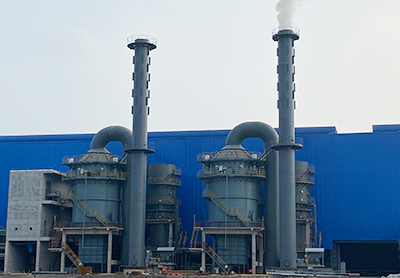
Wet electric and wet dust removal project of Steel slag of Hebei Handan Zhongban Steel Mill
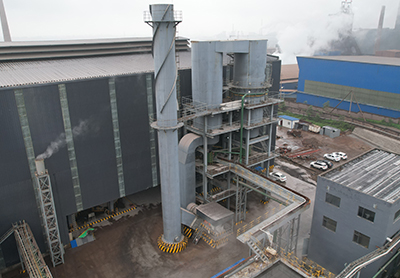
Shanxi Hongda steel slag wet electric Dust removal project
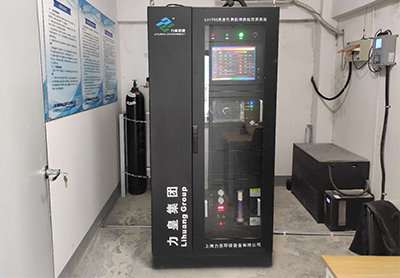
Shanghai Bulannuo Industrial packaging materials online monitoring project
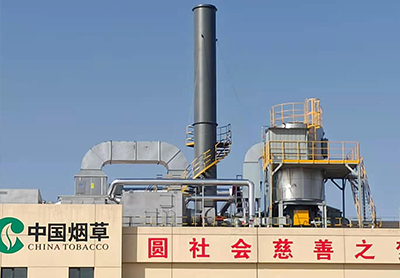
China Tobacco Ningxia Hongde VOCs exhaust gas treatment project
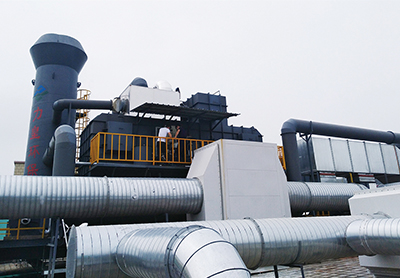
Shanghai Hengjie Wood Industry VOCs waste gas treatment project
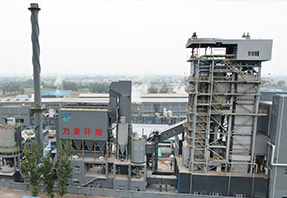
Pingyao Paper Mill desulfurization, denitration and dust removal EPC project
Summary and analysis of safety design of regenerative burner (RTO)
Regenerative combustion technology is one of the most efficient VOCs management technologies at home and abroad, its principle is to heat the exhaust gas to 760℃ above, so that the organic components in the exhaust gas at high temperature oxidation decomposition into non-toxic carbon dioxide and water. The high temperature gas produced by oxidation flows through the special ceramic heat storage body, so that the ceramic body heats up and "heat storage", which is used to preheat the subsequent organic waste gas, so as to save the fuel consumption of the waste gas heating. The ceramic regenerator is usually divided into two (including two) or more zones or chambers, and each regenerator goes through the process of heat storage, heat release and cleaning successively. According to statistics, the VOCs governance technology equipment used in China, thermal combustion equipment more than 1000 sets, and is still rising. Generally speaking, RTO is suitable for industries with high exhaust emission concentration, such as automobile manufacturing, chemical industry, industrial painting, pharmaceutical, etc., but for industries with low exhaust emission concentration, exhaust gas can also enter RTO for treatment after proper concentration.
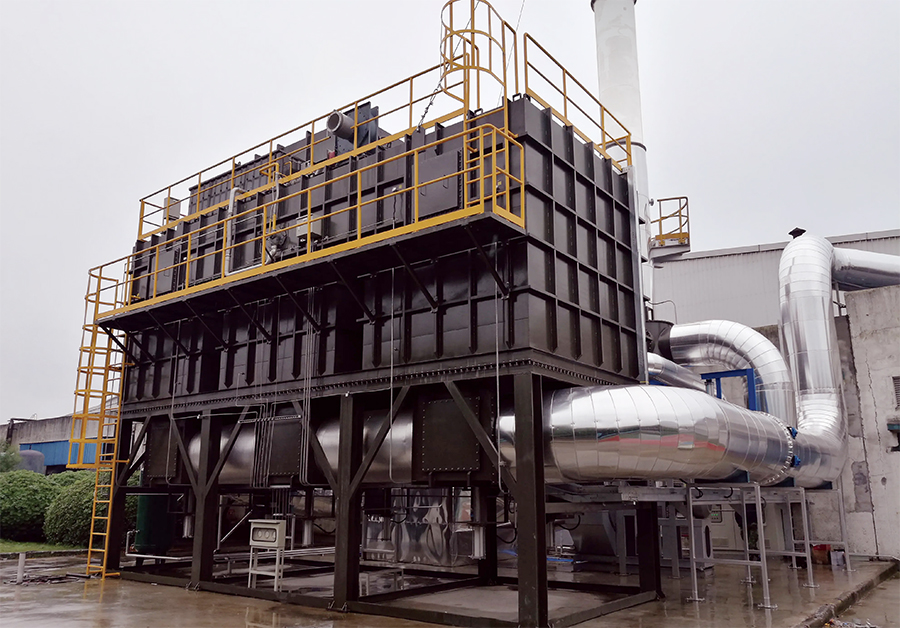
Because organic waste gas has flammability and explosion risk, and RTO equipment adopts open flame incineration technology, therefore, safety is the first factor to be considered in the design of organic waste gas incineration process. In order to further standardize the construction of RTO system in enterprises and guide the users to manage and use RTO system scientifically and safely, the state has issued a number of technical standards and specifications to stipulate and require this.
On August 27, 2019, the Ministry of Industry and Information Technology approved the RTO industry standard "Industrial Organic Waste gas Thermal Combustion Device" (JB/T 13734-2019). This standard specifies the terms and definitions, classification and models, technical requirements, test methods, inspection rules, marks, packaging, transportation and storage of industrial organic waste gas thermal combustion device.
On January 14, 2020, the Ministry of Ecology and Environment issued the 6th announcement of 2020, approving the Technical Specification for the Treatment of Industrial Organic Waste Gas by thermal storage Combustion Method as the national environmental protection standard, and issued the standard No. HJ1093-2020. The standard specifies the technical requirements for design, construction, acceptance, operation and maintenance of industrial organic waste gas treatment projects by regenerative combustion. It is suitable for the construction and operation management of the industrial organic waste gas treatment project of thermal storage combustion method, and can be used as the reference basis for environmental impact assessment of construction projects, engineering consultation, design, construction, acceptance of environmental protection facilities, and operation and management after completion.
On December 24, 2021 emergency manage hall in jiangsu province issued and ecological environment agency jointly organizes the regenerative burning furnace (RTO) system security technology requirements (trial), the standard will apply to regenerative incinerator (hereinafter referred to as the RTO furnace) system construction and reconstruction of engineering consultation, evaluation, design, installation, acceptance and operation management, At the same time, RTO furnace projects that have been built before the implementation of this standard are required to be implemented by reference. This standard will specify the safety technical requirements for the engineering design, installation, acceptance and operation management of RTO furnace systems.

 The Public
 Tik Tok





 Company Profile






![New stainless steel activated carbon adsorption box selected [Li Huang] spot supply](/static/upload/image/20230202/1675331534626389.jpg)