TOP
TOP
Related Products
Related Cases
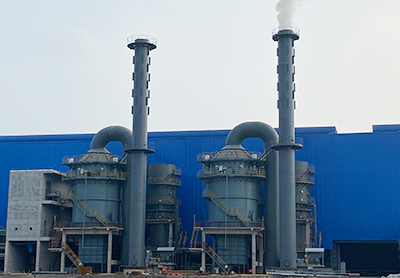
Wet electric and wet dust removal project of Steel slag of Hebei Handan Zhongban Steel Mill
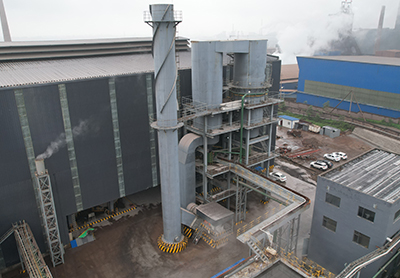
Shanxi Hongda steel slag wet electric Dust removal project
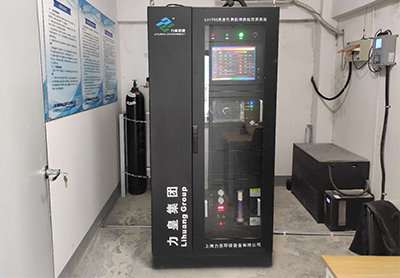
Shanghai Bulannuo Industrial packaging materials online monitoring project
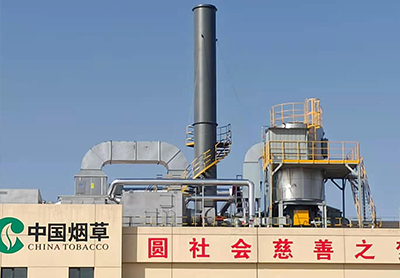
China Tobacco Ningxia Hongde VOCs exhaust gas treatment project
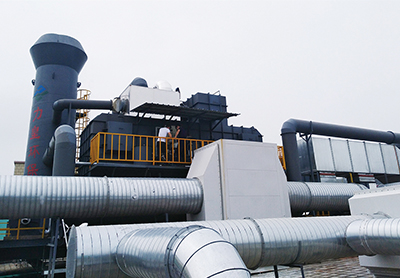
Shanghai Hengjie Wood Industry VOCs waste gas treatment project
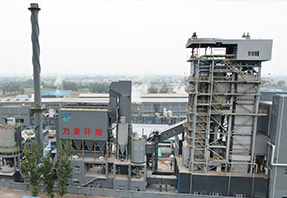
Pingyao Paper Mill desulfurization, denitration and dust removal EPC project
The role of RCO catalyst in catalytic combustion equipment
Catalytic combustion technology, as one of the VOCs waste gas treatment technologies, has a series of characteristics in the field of ecological environment protection, such as high purification rate, low combustion temperature, no open flame, no secondary pollution, safety, energy conservation, and environmental protection. The application is mature and has good development prospects, receiving unanimous praise from market users. Due to the fact that catalysts are a critical component of catalytic combustion systems, the synthesis process and usage rules of catalysts become even more important.
1. Principle of catalytic combustion
The principle of catalytic combustion reaction is that at lower temperatures, organic waste gas is completely oxidized and decomposed under the action of the catalyst, thereby achieving the goal of purifying the gas. Catalytic combustion is a typical gas-solid catalytic reaction, which is based on the participation of reactive oxygen species in deep oxidation. In the process of catalytic combustion, the role of the catalyst is to reduce the activation energy of the reactants and increase the reaction rate. Under the action of catalysts, organic waste gas can achieve flameless combustion at lower ignition temperatures, releasing a large amount of heat while being oxidized and decomposed into carbon dioxide and water vapor.
2. What is a low-temperature catalyst
Chemical reactions that used to only occur at higher temperatures can now be carried out at relatively lower temperatures using low-temperature catalysts - low-temperature reaction catalysts. The catalyst reduces the activation energy of the reactants.
3. The role and influence of VOCs catalysts in catalytic combustion systems
Due to its low-temperature catalytic reaction, it not only reduces energy consumption but also does not produce nitrogen oxides due to open flame combustion.
4. Are the advantages of nanoscale catalysts and the higher the content of precious metals in the catalyst, the better?
The volume of precious metals in catalysts can only come into better contact with organic matter when they are highly dispersed in a few nanometers. If the content and density of precious metals in the catalyst are forcibly increased, small particles of precious metals will collide and aggregate together before coming into contact with organic matter, forming relatively large particles. This means that only the surface of the large particles can come into contact with organic matter, and the precious metal particles squeezed inside will be wasted, and the efficiency of the catalytic reaction cannot be effectively improved.
5. What is the ignition temperature?
For example, if the ignition temperature of catalytic combustion is 200 ℃, before 200 ℃, the temperature of the catalytic bed changes according to the temperature adjustment of the electric furnace (without considering factors such as temperature difference transfer, heat exchange, and insulation). If the temperature of the electric furnace is adjusted to 60 ℃, the temperature of the catalytic bed will be around 60 ℃. Once the electric furnace is adjusted to the ignition temperature of 200 ° C, a rapid and violent reaction occurs inside the catalytic combustion, and the catalytic bed instantly rises to 350 ° C, while the electric furnace temperature remains at 200 ° C. That's why using low-temperature catalysts can reduce energy consumption.
6. Can catalytic combustion be used directly to treat organic waste gas in flue gas without pre-treatment?
I can't do it. Not to mention some chemical substances that can permanently deactivate catalysts, heavy metals contained in particulate matter, oily dust, paint mist, water vapor, and other smoke can cover the active centers on the surface of the catalyst, causing it to deactivate after sintering. Therefore, it is necessary to do a good job of pre-treatment to prevent these from entering catalytic combustion.
7. Explanation of catalyst poisoning (loss of activity)
Some chemicals can poison catalysts. Organic or inorganic compounds containing phosphorus, sulfur, lead, mercury, arsenic, and halogens have a strong destructive effect on catalysts, leading to permanent deactivation and inability to restore activity.
8. Treatment method for catalyst carbon deposition
The catalyst can be heated to 500 ℃ in fresh air and maintained for about 2-4 hours to remove or partially remove carbon deposits.

 The Public
 Tik Tok





 Company Profile






![New stainless steel activated carbon adsorption box selected [Li Huang] spot supply](/static/upload/image/20230202/1675331534626389.jpg)