TOP
TOP
Related Products
Related Cases
Wet electric and wet dust removal project of Steel slag of Hebei Handan Zhongban Steel Mill
Shanxi Hongda steel slag wet electric Dust removal project
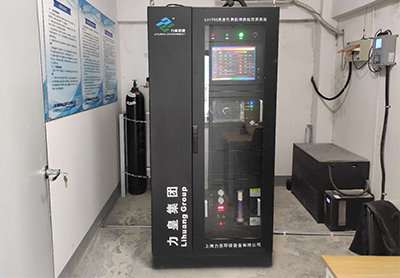
Shanghai Bulannuo Industrial packaging materials online monitoring project
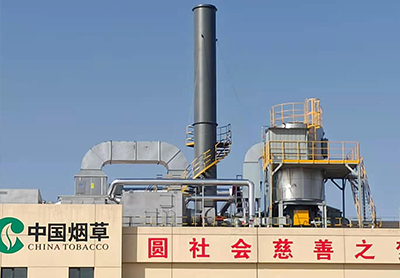
China Tobacco Ningxia Hongde VOCs exhaust gas treatment project
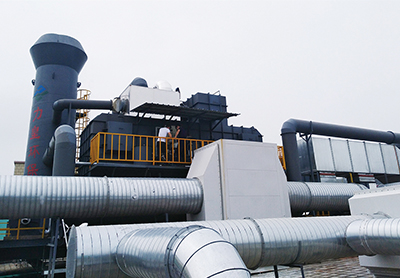
Shanghai Hengjie Wood Industry VOCs waste gas treatment project
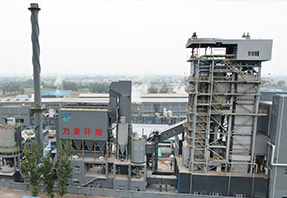
Pingyao Paper Mill desulfurization, denitration and dust removal EPC project
Treatment methods for residual VOCs in zeolite wheels

At present, the end treatment methods for VOC at home and abroad include condensation, adsorption, oxidation, biological treatment, absorption, plasma purification, etc. The adsorption concentration method using zeolite materials as carriers has been widely used in the treatment of VOC waste gas (zeolite wheels). The national requirements and efforts for the prevention and control of VOCs pollutants are gradually strengthening, and the zeolite rotary adsorption concentration method for low concentration waste gas treatment has become the preferred treatment plan for many enterprises.
During use, the residue of VOCs inside the impeller can lead to the deterioration of the zeolite impeller and a decrease in treatment efficiency. How can we avoid and respond to such situations?
01. Waste gas pretreatment

The pre-treatment measures for exhaust gas usually include dust removal, dehumidification, defogging, and removal of high boiling substances. According to the actual situation of VOCs waste gas to be treated, appropriate waste gas pretreatment measures need to be selected. For example, the semiconductor manufacturing process has strict requirements for particulate matter in the production site, which is usually a clean workshop. Therefore, the particulate matter content in organic waste gas is extremely low and usually does not require dust removal pretreatment.
For example, the main organic raw materials used in the production process of chip manufacturing usually have the characteristics of low boiling point and easy volatility, but a small amount of high boiling point substances cannot be ruled out, such as the main component of the stripping solution, diethylene glycol amine (boiling range 218-224 ℃). Pre treatment devices such as condensation and front activated carbon adsorption can be added in the treatment process of high boiling point substances to prevent high boiling point substances that are difficult to desorb from VOCs waste gas from entering the zeolite runner.
High boiling point VOCs are prone to condensation after entering the exhaust gas pipeline, thereby increasing the humidity of the exhaust gas. When the humidity of the organic waste gas entering the zeolite rotary system exceeds 80%, it will have a serious impact on the hydrophobic zeolite molecular sieve. Therefore, it is recommended to install a drying and dehumidification pre-treatment device for high humidity exhaust gas, so as to maintain the humidity of the exhaust gas entering the wastewater rotary system within a stable and controllable range.
02. High temperature regeneration
According to research conducted on domestic chip companies, the commonly used organic substances in the chip manufacturing industry include isopropanol (boiling point of 82.45 ℃) and propylene glycol monomethyl ether acetate (boiling point of 146 ℃); It also contains a small amount of high boiling substances, such as diethylene glycol amine (boiling range 218-224 ℃).
The regeneration temperature of zeolite wheels in the chip manufacturing industry is usually 180-200 ℃. At this regeneration temperature, high boiling substances such as diethylene glycol amine cannot be effectively desorbed from the zeolite wheels, gradually accumulating inside the wheels.
After conducting research on the aggregation of high boiling substances in the zeolite rotary system, it is known that after one month of operation, there is indeed a large amount of organic matter accumulation inside the rotary system, with an organic matter accumulation amount of 6wt%. After effective high-temperature desorption, the accumulation of organic matter inside can be reduced by about 40% to 60%. Therefore, high-temperature desorption can effectively remove high boiling organic matter accumulated inside the zeolite impeller.
Enterprises should analyze the distribution of exhaust gas composition, the proportion of high boiling substances, and the total amount of exhaust gas generated based on the actual generation of exhaust gas, in order to determine the frequency of high-temperature regeneration. The more suitable frequency for high-temperature regeneration is once every 2-3 months.
The temperature of high-temperature regeneration can also affect the high-temperature desorption effect. If the high-temperature desorption temperature is selected too low, the high boiling point substance cannot be effectively removed; If the high temperature desorption temperature is selected too high, it will have a certain impact on the skeleton structure of zeolite molecular sieve, thereby reducing its service life. The high-temperature desorption temperature should be around 300 ℃, and the corresponding internal components of the zeolite impeller should use sealing components that can withstand high temperatures of 300 ℃.
03. Water washing regeneration

Organic substances commonly used in the chip manufacturing industry, such as isopropanol, propylene glycol monomethyl ether acetate, etc., usually have good water solubility and can be removed by water washing regeneration to remove high boiling substances accumulated inside the zeolite impeller.
Water washing regeneration can effectively improve the treatment efficiency of zeolite rotary system. For factories, when the water washing regeneration frequency reaches 4-6 times per year, the treatment efficiency of zeolite rotary system can reach 95% to 99%. Therefore, increasing the frequency of regular water washing regeneration can effectively prevent the aggregation of high boiling substances inside the zeolite impeller and maintain high treatment efficiency.
Due to the fact that zeolite wheels are usually manufactured by coating molecular sieves on the surface of ceramic fiber paper using inorganic adhesives, not only will the wheels not undergo cracking deformation during water washing, but also there will be no problems such as performance degradation and shortened service life caused by molecular sieve detachment.
However, attention should be paid to the water quality during washing. If a large amount of calcium and magnesium ions are present, carbonates may form inside the zeolite, blocking the honeycomb like channels of the zeolite impeller; Trace amounts of heavy metals and chlorine in water can also poison zeolite.
It is worth noting that not all zeolite wheel materials are resistant to water washing. Enterprises should consult with the manufacturer of zeolite wheel equipment before water washing and regeneration.
04. High pressure air blowing

During the shutdown inspection and maintenance period, the enterprise uses high-pressure air to blow and sweep the zeolite wheel. However, high-pressure air blowing usually only removes the dust attached to the surface of the zeolite impeller, while VOCs organic matter is usually adsorbed inside the molecular sieve pores and cannot be effectively removed. Therefore, it is necessary to choose in combination with other treatment methods mentioned above.

 The Public
 Tik Tok





 Company Profile






![New stainless steel activated carbon adsorption box selected [Li Huang] spot supply](/static/upload/image/20230202/1675331534626389.jpg)