TOP
TOP
Related Products
Related Cases
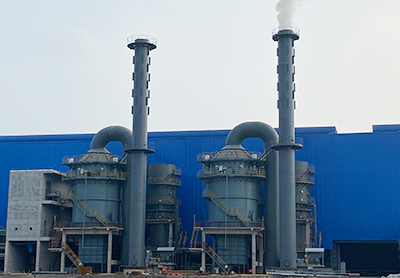
Wet electric and wet dust removal project of Steel slag of Hebei Handan Zhongban Steel Mill
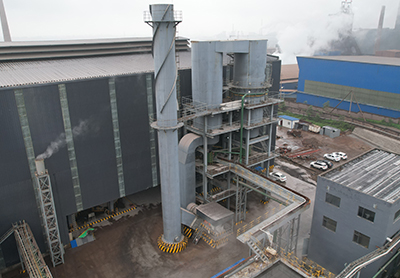
Shanxi Hongda steel slag wet electric Dust removal project
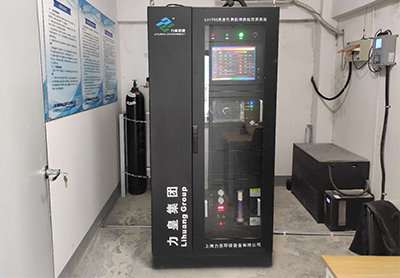
Shanghai Bulannuo Industrial packaging materials online monitoring project
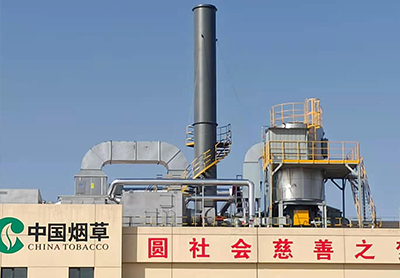
China Tobacco Ningxia Hongde VOCs exhaust gas treatment project
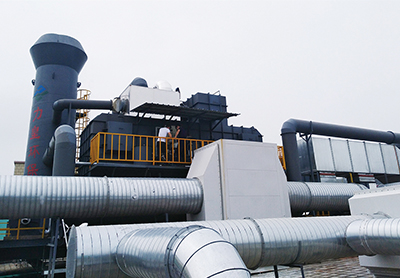
Shanghai Hengjie Wood Industry VOCs waste gas treatment project
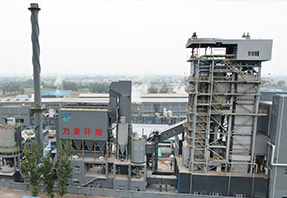
Pingyao Paper Mill desulfurization, denitration and dust removal EPC project
Why can reducing the oxygen content of the boiler appropriately reduce the ammonia consumption of the denitrification system?
1、 How is ammonia used for denitrification?
Ammonia gas is sprayed into the high-temperature flue gas denitrification device as a denitration agent, and under the action of a catalyst, NOx in the flue gas is decomposed into N2 and H2O. The reaction formula is as follows:
Catalyst: 4NO+4NH3+O2 → 4N2+6H2O
Catalyst: NO+NO2+2NH3 → 2N2+3H2O
Generally, by using appropriate catalysts, the above reactions can be effectively carried out within the temperature range of 200 ℃ to 450 ℃. Under the condition of NH3/NO=1, a denitrification efficiency of 80-90% can be achieved.
2、 Why can lowering the oxygen content of the boiler reduce the ammonia consumption of the denitrification system?
1. During the combustion adjustment process, appropriately reducing the oxygen content can reduce the excess air coefficient of boiler combustion, which means that the remaining amount during the combustion process will be reduced.
2. During the entire process, the combustion is in a state of slightly anaerobic combustion, and the contact area between sulfur elements in coal and air decreases, resulting in a decrease in the amount of NOx generated through combustion.
3. If the generation decreases, the amount of ammonia required for the denitrification system to maintain the same NOx content will decrease. At this time, the ammonia injection control valve will be closed, and the ammonia amount will naturally decrease.
3、 The impact of low oxygen combustion on boiler safety.
1. Although lower oxygen levels help reduce the generation of NOx, thereby reducing ammonia consumption, too low oxygen levels can cause incomplete combustion in boilers. The most obvious is an increase in the carbon content of fly ash, which leads to incomplete combustion losses and increases coal consumption, resulting in a decrease in economic efficiency. When oxygen levels are severely insufficient, combustion instability may even occur, affecting the safety of boiler operation.
2. When the oxygen control is too low, a reducing atmosphere and a high content of H2S gas will be formed near the water-cooled wall of the hot water boiler. H2S gas has a strong corrosion on the water-cooled wall, which will damage the protective film of Fe2O3 and continuously corrode the pipe wall. The melting temperature of ash in reducing gases will significantly decrease, which can easily cause slagging in the furnace. Therefore, if the oxygen content is controlled too low, there is a risk of high-temperature corrosion and slagging, which affects the safety of boiler operation. To prevent slagging and high-temperature corrosion of the water-cooled wall, the carbon monoxide content in the flue gas should be controlled below 120PPm. The carbon monoxide content in flue gas is closely related to oxygen content, fuel type, and powder production operation mode.
4、 The impact of high oxygen levels on boiler combustion.
1. Within a certain range, an increase in operating oxygen can improve the contact and mixing between fuel and air, which is conducive to complete combustion and reduces the heat loss of incomplete combustion of combustible gases and solid. As the oxygen content increases, it will increase the amount of flue gas in the boiler and increase the heat loss of exhaust gas. Excessive oxygen content during boiler combustion will also increase the power consumption of the fan. Therefore, oxygen control has a significant impact on the economic efficiency of boiler operation. A reasonable operating oxygen level should minimize the sum of various heat losses and maximize the thermal efficiency of the boiler. The control of oxygen should be on the right side of the inflection point where the carbon monoxide content suddenly increases, which is the area where the boiler heat loss is minimized. In addition, an increase in oxygen content leads to an increase in flue gas flow rate and velocity, which also has an adverse effect on the wear of the heating surface.
2. The total NOx content generated by boiler combustion increases with the increase of oxygen content, so high oxygen operation is unfavorable for NOx control of the boiler. Similarly, this school will cause an increase in ammonia consumption in the denitrification system, which is detrimental to both economy and safety.

 The Public
 Tik Tok





 Company Profile






![New stainless steel activated carbon adsorption box selected [Li Huang] spot supply](/static/upload/image/20230202/1675331534626389.jpg)